
Finding food and water in FERAL Animal Survival
How carnivore, herbivore and omnivore food loops differ in FERAL: Animal Survival — and the four shoreline rules that stop ambush predators from resetting your growth at water.
How the three diets change your survival loop
Hunger and thirst drive every decision in FERAL: Animal Survival: keeping both bars fed is what fills your growth bar, while running dry forces you onto predictable paths where predators wait. Before spending amber on a new species, understand how its diet reshapes each session:
| Diet group | Roster examples | How food is secured | Main survival bottleneck |
|---|---|---|---|
| Carnivore | Wolf, Siberian tiger, Saltwater crocodile, Alligator | Hunting AI prey, finishing player kills or scavenging carcasses | Failed hunts drain stamina and health before you ever eat |
| Herbivore | Deer, Elk, Bison, Hippo, Porcupine | Grazing plant sources across meadows and forest edges | Grazing and drinking spots are predictable ambush magnets |
| Omnivore | Grizzly bear, Red fox, Red panda | Accepts both plant sources and meat | Shortest search leg; lets you skip bad fights without starving |
If your goal is relaxed solo amber farming, omnivores and herbivores eliminate the biggest variance in the game: never being forced to pick a losing fight just to stop hunger ticking down.
How to drink without getting ambushed at the waterline
Water is the single deadliest bottleneck on the valley map because land carnivores, packs and semi-aquatic reptiles (alligators, saltwater crocodiles) all know every player must visit rivers or the hidden lake.
Follow four habits every time your thirst bar drops:
- Never sprint all the way to the water's edge. Stop inside the tree line ten seconds early, let your stamina bar refill to 100%, and scan the reeds and opposite bank before stepping out.
- Avoid wide, flat beaches. Wide sandbars give land hunters clean straight-line angles for LUNGE and give aquatic predators deep-water approaches right up to your feet. Pick narrow creek bends with rocks or trunks beside you.
- Drink in short bursts, not one long lock. Topping up half a bar and rotating back into cover breaks the timing window ambushers rely on.
- Leave by a fresh angle. Retracing the exact path you walked in on runs straight into carnivores trailing your approach.
Feeding safely as a juvenile vs an adult
When you first spawn (see the beginner guide for your first-hour checklist), avoid contested central clearings even if food looks abundant there. An adult carnivore patrolling a high-traffic meadow can erase twenty minutes of juvenile growth in one burst. Stick to quiet forest borders where plant patches, small prey and sheltered water sit close together, or travel with grown herd mates who can watch sightlines while you eat.
Once you reach adult size, test whether switching diets improves your hourly amber output: run a ten-minute session on a free starter, record your gain, and compare unlock times in the amber calculator or hunting guide.
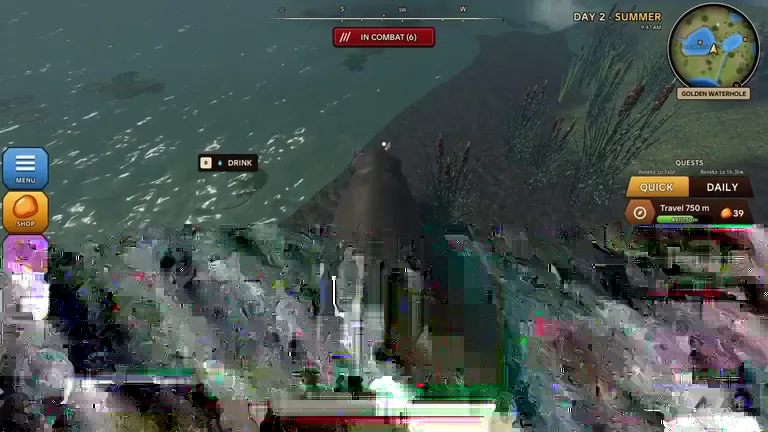
Feeding, drinking and shoreline survival in action
YouTube · loads on clickQuestions players ask
Which diet is easiest to keep fed in FERAL Animal Survival?
Omnivores — Grizzly bear, Red fox and Red panda — have the easiest food loop because they can eat both plant food and meat, letting you graze safely when servers are crowded and take opportunistic meat when clearings are quiet.
How do you drink water safely without dying in FERAL?
Stop inside forest cover to refill stamina before approaching, choose narrow bends instead of wide beaches, scan the waterline for crocodiles, alligators or hippos, and drink in short bursts with an exit route planned.
Do herbivores ever need to hunt in FERAL Animal Survival?
No. Herbivores fill their hunger and growth bars from plant sources and water alone. Even herbivores with defensive strikes like the Hippo never need meat to grow.
Where do you find water in FERAL Animal Survival?
Follow low-ground valley channels and green tree lines on the map, or visit the hidden lake tucked behind the forest edge. Memorising two quiet drinking bends early saves more growth than any combat skill.